How to Start a Business in 2026: The Complete Beginner's Step-by-Step Guide
Starting a business in 2026 is more achievable than at any point in history. You no longer need a storefront, a big loan or a team — just a useful idea, an internet connection and a clear plan. But "just start" is bad advice on its own. This complete beginner's guide walks you through exactly how to start a business, step by step, from first idea to first sale.
Step 1: Start with a problem, not a product
The biggest reason new businesses fail is that they build something nobody wants. Avoid this by starting with a problem instead of a product. Ask: what is a frustration, task or goal that a specific group of people would happily pay to solve? The best business ideas are simply painful problems with a price tag attached.
Write down three problems you understand well — from your job, your hobbies or your own life. You are looking for a problem that is common, urgent and something people already spend money trying to fix.
Step 2: Choose a simple, proven business model
You don't need to reinvent anything. For beginners in 2026, the simplest models to start are:
- Digital products — eBooks, templates, courses. Create once, sell forever, no inventory.
- Services / freelancing — sell your skill (writing, design, marketing) for money fast.
- Affiliate / content — build an audience and earn by recommending products.
Digital products are especially powerful because the profit margins are high and delivery is instant. If that path interests you, How to Start a New Business lays out the foundations clearly for complete beginners.
Step 3: Validate before you build
Before spending weeks building, confirm people actually want it. Talk to five to ten people in your target market and describe your offer. Better still, try to make a pre-sale — if someone is willing to pay before it even exists, you have real validation. If nobody bites, adjust the offer before you invest your time. Validation is the cheapest insurance in business.
Step 4: Launch lean — done beats perfect
New founders waste months perfecting logos, websites and business cards. Customers don't care about any of that at the start — they care whether you solve their problem. Launch with the smallest version of your offer that delivers real value. You can always improve it once money is coming in. Speed to first sale matters far more than polish.
Step 5: Set up the essentials (and skip the rest)
You only need a few things to operate:
- A simple way to take payment (a checkout link is enough).
- A one-page website or product page that clearly explains the offer.
- A way to deliver what you sell.
- A basic record of income and expenses.
That's it. Resist the urge to buy tools and subscriptions you don't yet need — keep your costs near zero until you have paying customers.
Step 6: Price for profit and confidence
Most beginners price too low out of fear. Remember you are charging for the outcome, not the hours. Look at what similar offers sell for, position yourself fairly, and don't be afraid to charge what your result is worth. Low prices attract difficult customers and starve your business of the cash it needs to grow.
Step 7: Get your first customers
A business is not real until someone pays you. Start with your existing network, show up consistently on one social platform, and build an email list of interested people. Getting those first few sales is a skill in itself — our full guide on how to get customers for your business breaks down 12 proven, low-cost ways to land your first 100 buyers.
Step 8: Reinvest and grow
Once sales start, resist the urge to stop. Reinvest early profits into the things that brought customers — more content, a better offer, a small ad test. Add complementary products so each customer can buy more from you over time. This is how a single product becomes a real, growing business.
Common beginner mistakes to avoid
- Waiting until everything is perfect. It never will be. Launch and improve.
- Trying to reach everyone. A specific customer is far easier to win.
- Competing only on price. Compete on value and results instead.
- Ignoring marketing. A great product nobody hears about makes no money.
- Giving up too early. Most businesses that fail do so from quitting, not from a bad idea.
Start today — the best time is now
You don't need to quit your job tomorrow or risk your savings. Start small, start lean, and start now. Pick one problem, build the smallest useful solution, and make your first sale. Momentum comes from action, not planning.
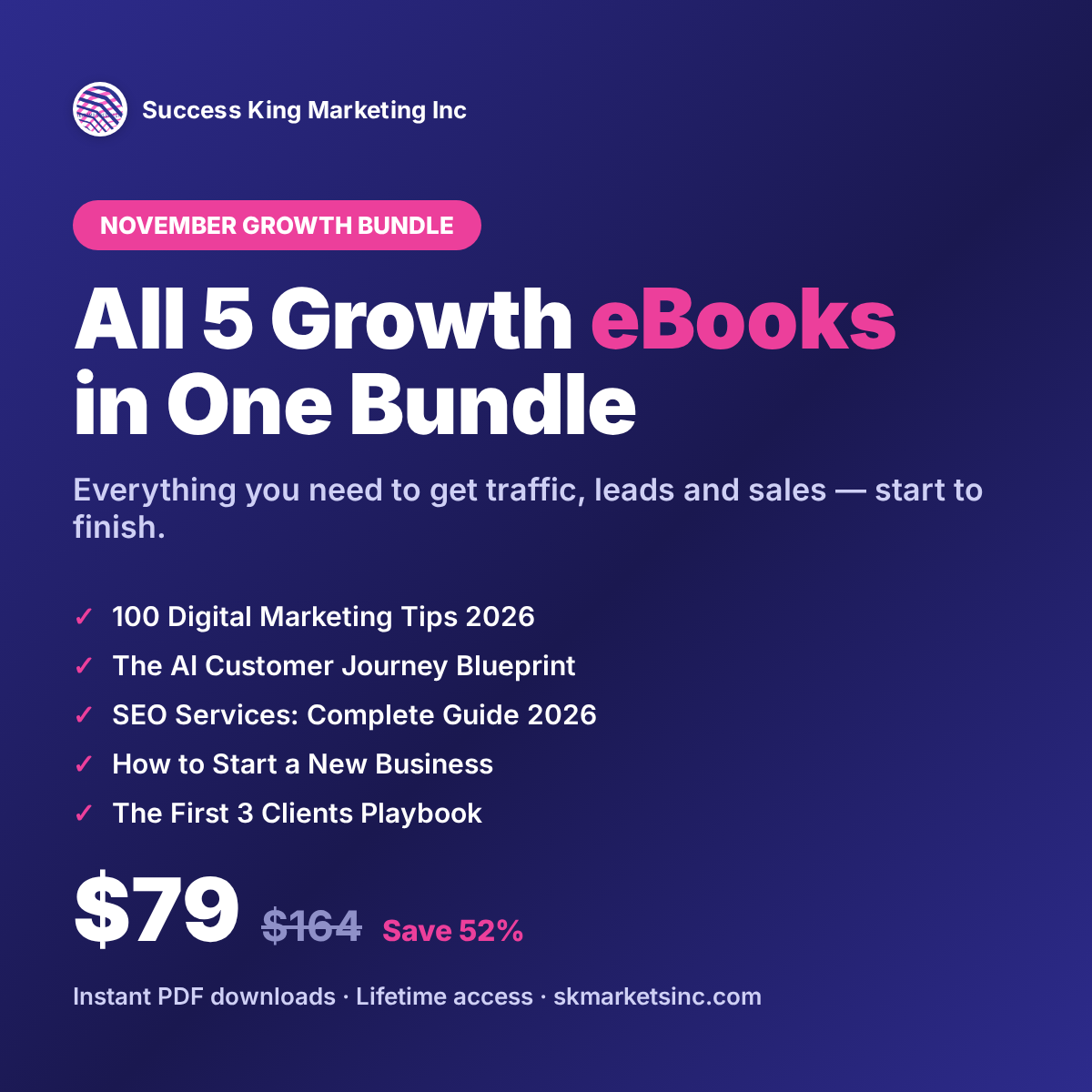
If you want everything in one place — the business foundations, marketing, SEO and customer-getting playbooks — the November Growth Bundle packages five best-selling guides together at over 50% off, so you can go from idea to income with a complete roadmap in hand. And if investing wisely is part of your plan, The Business and Investment Top Tips is a practical companion to keep your profits growing.