SEO for Beginners: How to Rank Your Website on Google in 2026
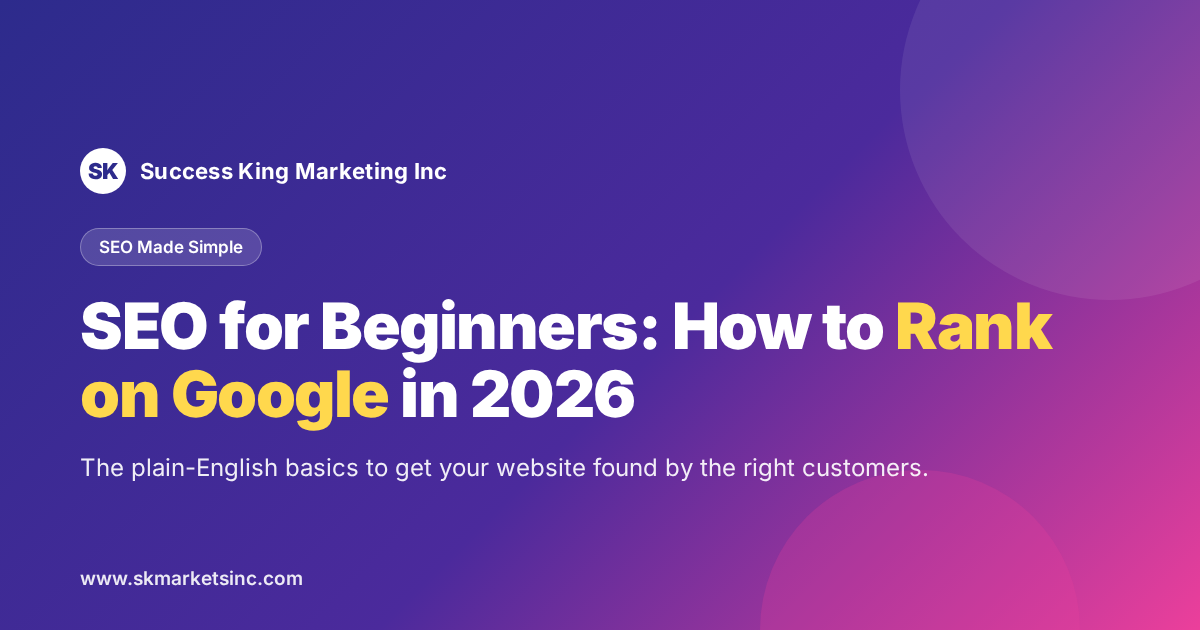
If the thought of ranking on Google feels overwhelming, you are not alone. But here is the truth most agencies will not tell you: SEO for beginners is mostly about doing a handful of simple things consistently — not about secret tricks or expensive tools. This guide gives you a clear, beginner-friendly path to getting your website on Google in 2026.
What SEO actually is
SEO — search engine optimization — is the practice of helping Google understand your pages so it shows them to people searching for what you offer. When someone types a question and your page is the best answer, Google ranks you higher. That is the entire game: be the best, clearest answer to a real search.
The payoff is huge. Unlike ads, search traffic is free, and it keeps coming long after you publish. A single well-ranked page can bring customers for years.
Step 1: Find the words your customers use
Everything starts with keywords — the exact phrases people type into Google. Think like your customer. If you sell handmade candles, they might search "best soy candles for gifts" rather than "premium wax products." Write down every phrase a buyer might use, including questions like "how do I..." and "what is the best...".
Prioritize phrases with clear intent to buy or act. These bring fewer visitors than broad terms, but a much higher share of them become customers.
Step 2: Create one focused page per topic
Google ranks pages, not websites. So give each important keyword its own dedicated page, and make that page genuinely useful. Answer the question fully, use plain language, add examples, and structure the content with clear headings so both readers and Google can scan it easily.
Avoid the beginner trap of stuffing keywords. Write naturally for people first. Use your main phrase in the title, the first paragraph, and a heading or two — then focus the rest of your energy on being helpful.
Step 3: Nail the on-page basics
A few technical fundamentals make a big difference, and none of them require coding:
- Title tag — a clear, compelling title under 60 characters that includes your keyphrase.
- Meta description — a short summary (around 150 characters) that makes people want to click.
- Headings — one main H1, then H2s and H3s to organize sections.
- Image alt text — describe every image so Google (and screen readers) understand it.
- Fast loading — compress images and keep your pages lightweight.
Get these right on every page and you will already be ahead of most small competitors. Our complete SEO services guide for 2026 walks through each of these with checklists you can apply today.
Step 4: Earn trust with links and proof
Google treats links from other websites like votes of confidence. You do not need hundreds — a few quality mentions from relevant sites go a long way. Earn them by creating content worth sharing, partnering with complementary businesses, and getting listed in reputable directories.
Internal links matter too. Linking your own pages together helps Google understand your site and keeps visitors exploring. (Notice how this article links to related guides — that is internal linking in action.)
Step 5: Be patient and consistent
SEO is a long game. New pages can take weeks or months to climb the rankings, especially on a newer site. The businesses that win are the ones that keep publishing helpful content and improving old pages instead of quitting after a month.
Track your progress with a free tool like Google Search Console. Watch which pages get impressions and clicks, then double down on what works and improve what underperforms.
Let automation and AI speed things up
In 2026, AI can take much of the grunt work out of SEO — suggesting topics, drafting outlines, and helping you cover a subject thoroughly. The strategy still has to be yours, but the right system turns a slow process into a steady engine. The AI Customer Journey Blueprint shows how to connect your content to the rest of your marketing so traffic actually converts into customers.
Turning SEO into a business
Once you understand these fundamentals, you hold a skill businesses pay well for. Plenty of people have turned beginner SEO knowledge into a service and landed paying clients within weeks. If that appeals to you, our guide on how to start a digital marketing agency and get your first clients lays out the exact steps.
Your next step
SEO for beginners comes down to this: find the phrases your customers search, build a focused and genuinely helpful page for each, cover the on-page basics, earn a few quality links, and keep going. Pick one page on your site today and apply everything above. Then do the next one next week.
Rankings are not won overnight — they are built, page by page. Start now, stay consistent, and let free search traffic become one of your most reliable sources of customers.