Why Marketing Lists Go Stale: How to Fix Data Gaps and Increase Conversions
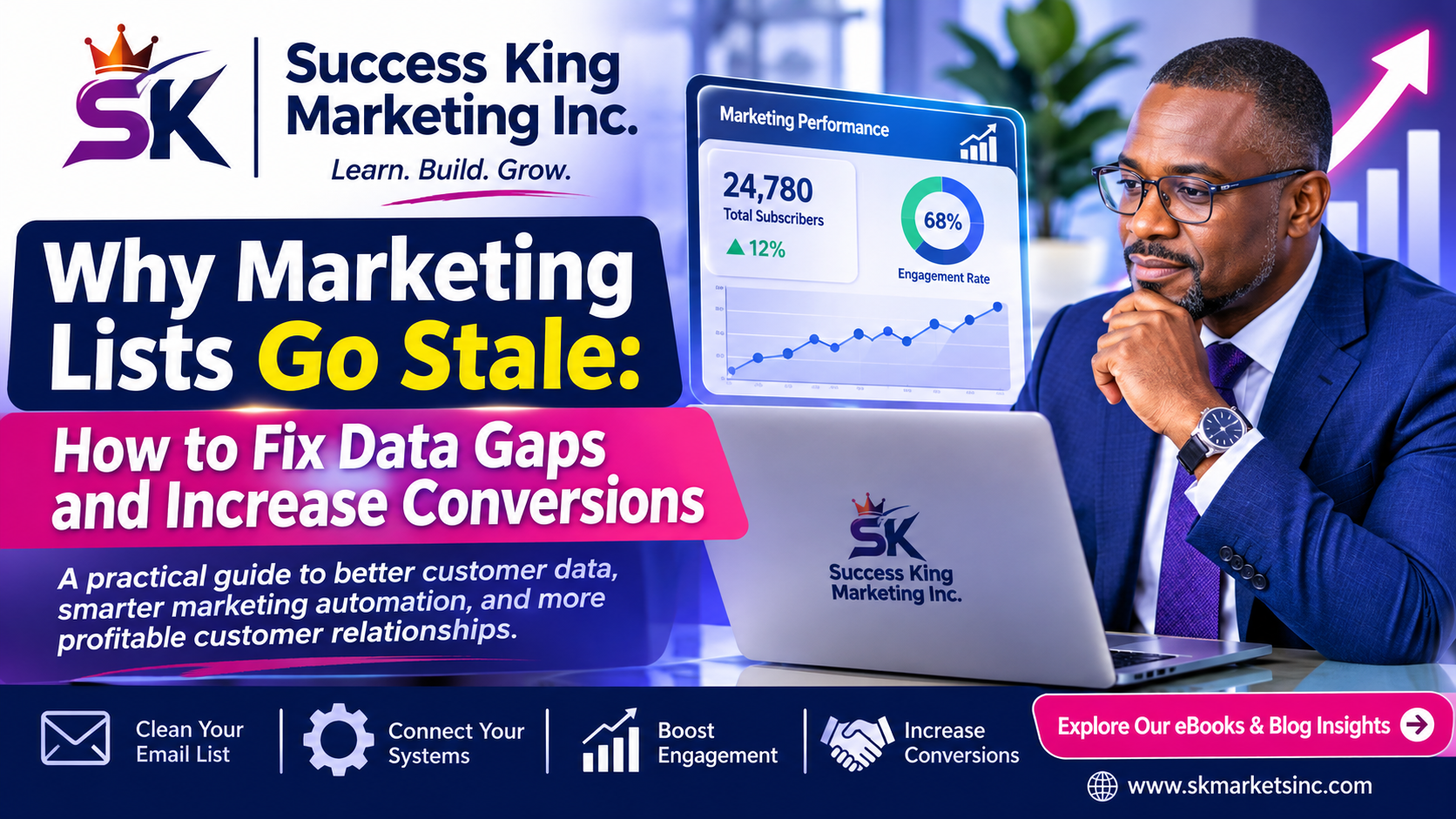
A Practical Guide to Better Customer Data, Smarter Marketing Automation, and More Profitable Customer Relationships
By Awung Ngang | Success King Marketing Inc.
Introduction: Is Your Marketing List Helping or Hurting Your Business? You spend time creating marketing campaigns, attracting website visitors, collecting email subscribers, and promoting your products. Your marketing list continues to grow, but are those contacts actually helping your business generate sales?
Here is an important question: How many people on your marketing list are still interested in what you offer?
An outdated marketing list can quietly undermine your business. Email addresses become inactive, customer preferences change, subscribers lose interest, and contact information becomes inaccurate. Meanwhile, disconnected marketing tools can prevent your business from delivering the right message to the right person at the right time.
The result? Lower engagement, wasted advertising resources, missed sales opportunities, and declining conversion rates.
For entrepreneurs and online businesses, effective marketing is not simply about collecting more contacts. It is about maintaining accurate customer information, understanding your audience, and building meaningful relationships.
In this guide, we explore why marketing lists go stale, how data gaps affect your marketing performance, and practical strategies to improve customer engagement and increase conversions.
- What Makes a Marketing List Go Stale? A marketing list becomes stale when its information is no longer accurate, relevant, or useful for communicating with potential and existing customers.
Many businesses collect customer information through website forms, online purchases, newsletter subscriptions, social media campaigns, and lead-generation activities.
However, collecting information is only the beginning. That information needs regular maintenance.
Several factors contribute to outdated marketing lists:
Inactive Email Subscribers People change email addresses, abandon old accounts, or simply stop opening promotional messages. If your business continues sending campaigns to inactive subscribers without reviewing engagement, your email marketing performance can suffer.
Outdated Customer Information Customers change jobs, locations, interests, purchasing habits, and personal preferences. Information collected months or years ago may no longer reflect their current needs.
Poor Data Collection Practices Incomplete registration forms, incorrect email addresses, duplicate contacts, and inconsistent customer records create unnecessary problems.
Lack of Regular List Maintenance Some businesses focus entirely on acquiring new subscribers while forgetting to review existing contacts. Over time, their databases become filled with outdated or irrelevant information.
The lesson is simple: A larger marketing list does not automatically produce more sales. A well-maintained, engaged audience is far more valuable.
- How Disconnected Marketing Systems Create Data Gaps One of the biggest challenges facing modern businesses is the use of multiple digital tools that do not communicate effectively.
For example, your website may collect customer information through a contact form, while your email marketing platform stores subscribers separately. Your online shop may maintain another customer database, and your customer relationship management (CRM) software may contain different records.
When these systems are disconnected, important information gets lost.
Consider this example:
A potential customer visits your website, subscribes to your newsletter, and purchases one of your eBooks. However, your email marketing system does not recognize the purchase.
That customer may continue receiving promotional messages encouraging them to buy the same eBook.
This creates a poor customer experience.
Other common problems include:
Sending duplicate promotional emails.
Offering products customers have already purchased.
Failing to follow up with interested prospects.
Missing opportunities to recommend relevant products.
Sending outdated information to existing customers.
These problems can damage customer trust and reduce the likelihood of repeat purchases.
Your marketing tools should work together to create a consistent customer experience.
- Why Stale Marketing Lists Reduce Conversions Marketing conversions depend on delivering relevant messages to people who are genuinely interested in your products or services.
When your customer data is inaccurate, your marketing campaigns become less effective.
Here are four important consequences.
Lower Email Engagement Inactive subscribers and irrelevant messages can reduce open rates and click-through rates. Repeatedly emailing unengaged contacts may also affect your sender reputation.
Wasted Marketing Resources Whether you invest in email campaigns, paid advertising, or lead-generation services, poor-quality data can cause you to spend money reaching people who are unlikely to become customers.
Reduced Customer Trust Customers expect businesses to understand their interests and communicate appropriately. Repeated, irrelevant, or contradictory messages can make your brand appear disorganized.
Missed Sales Opportunities Without accurate customer information, you may fail to identify people who are ready to purchase, existing customers who could benefit from additional products, or subscribers who need more information before making a decision.
Successful marketing requires more than visibility. It requires relevance, timing, and trust.
-
Seven Practical Ways to Fix Marketing List Data Gaps Improving your marketing list does not necessarily require expensive software or complicated systems. Start by establishing a consistent process.
-
Audit Your Existing Marketing Database Review your current subscriber and customer records.
Identify duplicate contacts, invalid email addresses, incomplete information, and subscribers who have not engaged with your campaigns for an extended period.
Separate active customers, potential customers, inactive subscribers, and other relevant audience groups.
This gives you a clearer understanding of the quality of your database.
- Verify and Update Customer Information Make it easier for subscribers to update their contact information and communication preferences.
Use appropriate email verification tools to identify invalid addresses and reduce unnecessary delivery failures.
Avoid collecting information you do not genuinely need.
- Segment Your Marketing Lists Not every subscriber has the same interests or purchasing intentions.
Create meaningful audience segments based on factors such as:
Products purchased.
Topics of interest.
Website activity.
Previous engagement.
Customer preferences.
Stage in the buying journey.
For example, someone interested in digital entrepreneurship may respond better to an eBook about starting an online business than to an unrelated travel promotion.
Segmentation allows you to deliver more relevant messages.
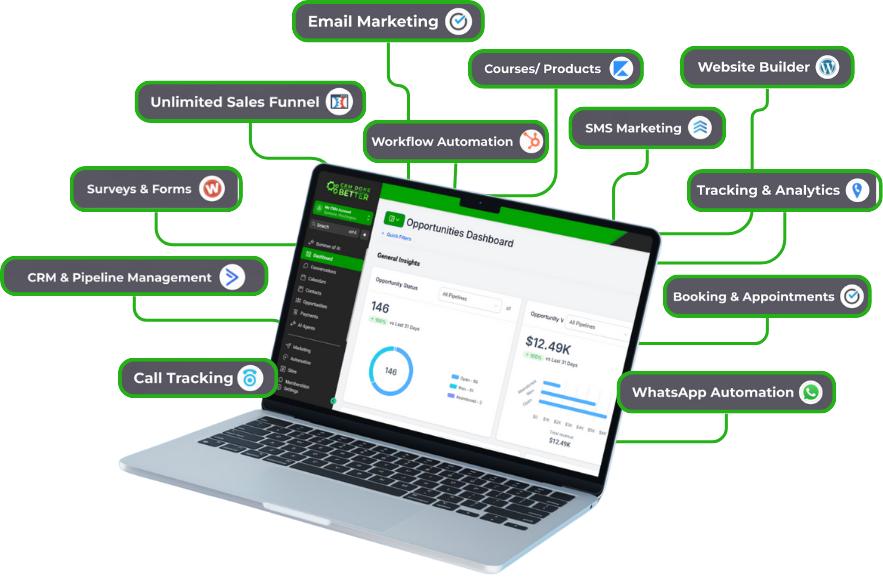
- Connect Your Digital Marketing Tools Your website, online shop, email marketing platform, and CRM should share relevant customer information where appropriate.
Explore integrations and automation tools that help synchronize customer records and reduce manual data entry.
If you operate a WordPress website or WooCommerce store, review the available integrations carefully before choosing a solution.
The objective is to create a connected marketing environment where customer interactions can inform future communications.
- Create Automated Follow-Up Campaigns Marketing automation can help your business maintain consistent communication without manually contacting every subscriber.
Examples include:
Welcome emails for new subscribers.
Product recommendations based on customer interests.
Follow-up messages after purchases.
Educational email sequences.
Re-engagement campaigns for inactive subscribers.
Automation should make communication more relevant, not simply increase the number of messages customers receive.
- Re-Engage Inactive Subscribers Before removing potentially valuable contacts, consider a permission-based re-engagement campaign.
Send a simple message asking whether subscribers still want to receive your updates.
Offer useful content, highlight new resources, or invite them to update their preferences.
If they remain inactive, follow your retention policy and applicable email marketing regulations.
- Monitor Your Marketing Performance You cannot improve what you do not measure.
Track relevant performance indicators, including:
Email delivery and bounce rates.
Open rates, where reliably measurable.
Click-through rates.
Unsubscribe rates.
Website traffic.
Lead-to-customer conversion rates.
Revenue generated by campaigns.
Review these figures regularly and use the findings to improve your marketing strategy.
- How Better Customer Data Can Increase eBook Sales For digital businesses, customer data is particularly valuable because it helps connect the right products with the right audiences.
At Success King Marketing Inc., our goal is to provide useful digital resources, eBooks, business insights, and online learning opportunities.
Imagine a visitor discovering your website through a blog article about digital entrepreneurship.
That visitor reads the article, subscribes to your newsletter, and expresses interest in starting an online business.
Instead of sending random promotional messages, your business can provide a relevant sequence:
Send a useful introduction to digital entrepreneurship.
Share a practical article explaining how to build an online business.
Recommend an eBook that provides more detailed guidance.
Follow up with additional educational resources.
Introduce related products when they are relevant to the subscriber's interests.
This approach creates a natural customer journey.
Rather than focusing exclusively on selling, you provide information that helps people make better decisions.
When customers recognize the value of your content, they are more likely to trust your recommendations and consider purchasing your products.
Explore our eBooks and digital resources at Success King Marketing Inc.
- Use Content Marketing to Attract Better Leads A healthy marketing list begins with attracting the right visitors.
One effective way to accomplish this is through consistent, high-quality content marketing.
Your blog should answer questions your target audience is already searching for.
For example, articles about digital marketing, online entrepreneurship, business development, artificial intelligence, personal growth, and practical money-making strategies can attract people interested in learning and improving their lives.
Search engine optimization (SEO) helps make this content discoverable.
Focus on:
Publishing useful, original articles.
Targeting relevant search phrases.
Writing descriptive titles and meta descriptions.
Using clear H2 and H3 headings.
Linking related articles and eBooks.
Optimizing images and alternative text.
Including relevant calls to action.
Every useful article creates another opportunity to introduce your brand to potential customers.
At Success King Marketing Inc., our Blog Insights section is designed to provide practical information while connecting readers with relevant digital products and learning resources.
Explore more insights at Success King Marketing Inc..
- Turn Your Website Visitors into Paying Customers Website traffic is important, but traffic alone does not guarantee revenue.
Your website needs a clear conversion strategy.
When visitors arrive at your website, make it easy for them to understand what you offer and what they should do next.
Consider implementing these strategies:
Create clear calls to action. Use descriptive buttons such as "Explore Our eBooks," "Read More Insights," and "Discover Digital Resources."
Promote relevant products. Connect blog articles to eBooks that expand on the topics discussed.
Build trust. Provide accurate product descriptions, transparent policies, and useful information.
Improve navigation. Make your Shop, Blog Insights, and important website pages easy to find.
Optimize mobile experiences. Ensure your website and checkout process work properly on smartphones and tablets.
Measure conversions. Identify which articles, campaigns, and product pages generate the most interest and sales.
Remember, the objective is not simply to attract visitors. It is to help interested visitors become informed customers.
- Protect Customer Data and Build Long-Term Trust Good marketing practices must respect customer privacy.
Collect information transparently, obtain appropriate consent, and provide clear options for managing subscriptions and communication preferences.
Follow applicable data protection requirements, including the GDPR where relevant.
Never purchase questionable email lists or send unsolicited promotional campaigns to people who have not given the necessary permission.
Trust is a valuable business asset. Protecting customer information helps establish stronger and more sustainable relationships.
Conclusion: Better Data Creates Better Marketing Opportunities Your marketing list should be more than a collection of email addresses. It should be a useful business asset that helps you understand your audience, deliver relevant information, and develop lasting customer relationships.
Stale contacts, disconnected systems, incomplete customer records, and irrelevant messages can quietly reduce your marketing effectiveness.
However, these challenges are manageable.
By auditing your database, updating customer information, segmenting subscribers, connecting your digital tools, and monitoring campaign performance, you can build a more effective marketing system.
For online entrepreneurs and digital businesses, the opportunity is significant.
Combine accurate customer data with valuable content, relevant eBooks, effective SEO, and well-designed conversion journeys.
The result is a stronger foundation for attracting qualified visitors, building customer trust, and generating sustainable online sales.
At Success King Marketing Inc., we believe that knowledge creates opportunities and the right digital resources can help turn those opportunities into results.
Ready to Improve Your Digital Marketing Strategy? Explore Success King Marketing Inc. for practical eBooks, business resources, and informative Blog Insights designed to help you grow your knowledge, strengthen your online presence, and build your business.
Learn Today. Build Tomorrow.
Visit: https://skmarketsinc.com
Explore our Shop. Discover our eBooks. Start building your next opportunity today.