



How Childhood Beliefs, Emotional Patterns, and Self-Worth Shape the Relationships We Choose
Author: Blog-Insight Team – Awung Ngang
Website: https://skmarketsinc.com
Category: Blog Insights | Relationships | Personal Growth | Emotional Resilience
“Those who cannot remember the past are condemned to repeat it.” — George Santayana

Person sitting alone on a porch at sunset, symbolizing emotional healing and breaking painful relationship patterns.
I was gone about two hours.
I’d gone to see my stepbrother, who lived nearby. My girlfriend didn’t want to come, so I told her to rest, and I’d be back soon.
When I got back to my father’s property, where we lived in the camper we’d bought together, it was gone.
So was she.
She’d packed my clothes into a bag and left them on my father’s porch on her way out. That told me everything I needed to know. The camper was the only place we’d been living, which meant I didn’t just lose a relationship that night.
But, i also lost my address.
When Someone Leaves Without Warning
It was the second time in a year she’d disappeared like that.
No calls. No warning.
Just gone, until she decided to come back and be the easier version of herself again.
I called my stepbrother. I posted online asking if anyone had seen her. Then I went back to his place and slept on his couch because there was nowhere else to go.
That’s when the crying started.
My kids weren’t really speaking to me at that point either, in the aftermath of a divorce a year earlier. The floor of my life had been pulled out from under me, and I was still standing on the spot where it used to be.
Emotional Recovery
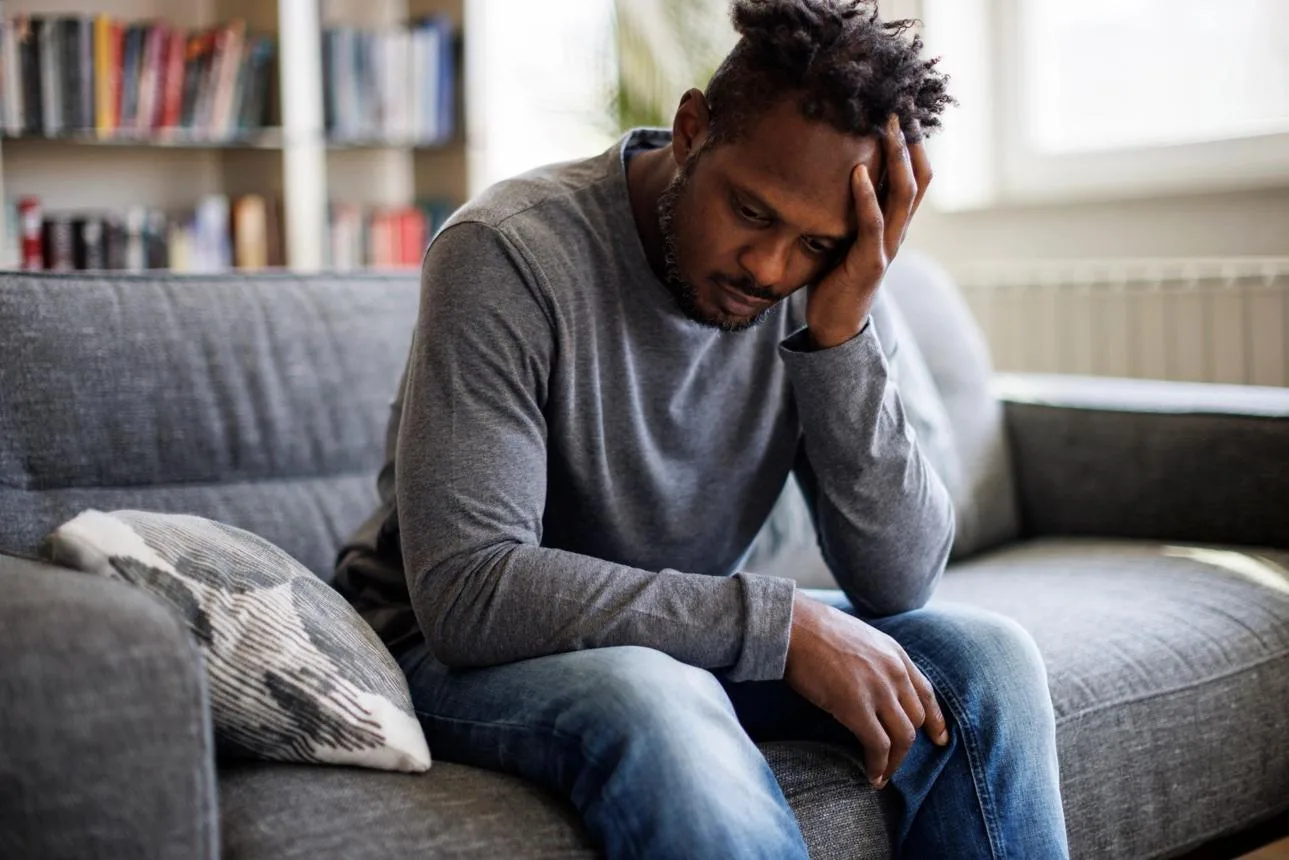
Person sitting alone on a couch after a difficult breakup.

The Friend Who Changed Everything
The next morning, an old friend called.
He’d seen my post overnight. He was about to leave for a week at his second home near the coast, and when he heard what happened, he told me to come with him.
“Take a week off from your life,” he said. “Come get your head together.”
A few hours later, we were on the road.
He gave me a room. and handed me a hundred dollars because genuinely, i had almost nothing. He bought me a pair of flip-flops because I’d left with basically the clothes on my back.
I want to sit with that detail for a second.
My friend looked at a grown man with nothing, and the thing he did was make sure that man had shoes for his feet.
The Story We Tell Ourselves
A few days into staying with him, wearing flip-flops he’d bought me, I felt an old, familiar sentence start forming in my head:
“Of course this happened. You’re not somebody people stay for.”
Maybe you’ve had a version of this thought yourself.
It’s the conclusion a kid reaches when the people who are supposed to show up don’t, over and over, until “I’m not worth staying for” stops feeling like a feeling and starts feeling like a fact.
I caught it doing that, though.
Noticing the sentence forming and asked it a question on purpose most mornings:
“Is this actually true, or just the oldest story. Do I know how to tell myself when someone leaves?”
Then I looked around the actual room.
My friend had come to get me.
A woman had left.
The evidence in the room didn’t support the sentence my head was trying to hand me.
Self Reflection
Person journaling while reflecting on limiting beliefs.

The Real Story Started Much Earlier
Here’s what I didn’t understand yet, standing in those borrowed flip-flops:
That porch wasn’t really the story.
It was one scene in a much longer one.
When I was around nine, there were stretches when my sister and I wouldn’t hear from our mother for months, or we would be left with our grandparents without really understanding why.
At that age, I didn’t have the ability to understand whatever she might have been struggling with.
I only knew that she wasn’t there.
And I turned her absence into a belief about myself.
As an adult, I’ve been able to look at my mother and those years with much more understanding and compassion.
But the belief a child forms can survive long after the child grows up.
Why Painful Relationship Patterns Repeat
My relationship with my ex-girlfriend ran for nearly seven years, on and off, until the night it finally ended for good.
There was real damage running in both directions across all of it.
I’m not going to pretend I was only the one left standing on porches.
Looking back, she had two sides, and I mean that plainly—not as some tidy metaphor.
One side showed up warm and easy, picking up exactly where things had left off like no time had passed.
The other side was the one that packed a bag and vanished.
No calls.
And no explanation.
Until she decided to become the first version again.
I’d already half-forgiven her first disappearance by the time we decided to build a life together.
That tells you something about how little it took to reset the pattern before I’d even finished learning from the last round of it.
For a long stretch of those years, I let myself be treated worse than I should have allowed.
I’ve had to be honest with myself about that part because it would be easy to tell this story as something that only happened to me.
Healthy Relationships
Two people communicating openly in a healthy relationship.

What This Means for Healing
One of the hardest parts of breaking painful relationship patterns is recognizing that the pattern often feels familiar before it feels unhealthy.
When childhood experiences create beliefs like “people always leave,” those beliefs can quietly shape adult decisions. We may forgive too quickly, ignore warning signs, or mistake emotional inconsistency for love.
Healing doesn’t erase the past.
It changes the story we tell ourselves about it.
The moment I questioned that old sentence—“You’re not somebody people stay for”—I began separating childhood beliefs from present-day reality.
That’s where healthier relationships begin.
Practical Ways to Break the Pattern
If this story feels familiar, consider these small but powerful practices:
- Notice recurring thoughts that appear after rejection or conflict.
- Ask whether those thoughts match today’s evidence.
- Pay attention to repeated relationship cycles instead of isolated incidents.
- Build friendships that demonstrate consistent care and reliability.
- Practice self-compassion while taking responsibility for healthier boundaries.
Breaking old patterns rarely happens all at once.
It happens one honest moment at a time.
Continue Your Growth Journey
At Success King Marketing Inc, we believe personal growth and lifelong learning create lasting change. Explore resources designed to help you build confidence, strengthen relationships, and develop healthier habits.
Recommended Resources

Actionable strategies for growing your online presence and increasing sales.
The AI Customer Journey Blueprint
Learn how AI can improve every stage of your customer experience.

Success in Business Online Course
Practical growth strategies for entrepreneurs and business owners.

Business and Investment Tips 2026
Modern insights for building a stronger financial future.
Explore more at skmarketsinc.com/shop.
Helpful Tools and Affiliate Resources
Discover additional resources available through Success King Marketing Inc:
- ClickBank digital products and business resources.
- Amazon recommended tools and everyday essentials.
- Travel Booking Services for affordable travel planning.
- Real PPV Traffic solutions to help grow your website traffic.
These resources complement our educational content and help readers continue building stronger personal and professional lives.
Related Blog Insights
Continue reading:
- Are You Emotionally Reactive? You May Be Stuck in Survival Mode
- What Is Happiness Without Love?
- Stop Chasing Everything: The Hidden Power of Contentment
- The AI Customer Journey Blueprint
- 100 Digital Marketing Tips
Each article supports your journey toward stronger relationships, greater resilience, and long-term personal growth.
FAQ
Why do people repeat unhealthy relationship patterns?
Many recurring relationship patterns develop from childhood beliefs, attachment experiences, and familiar emotional dynamics that continue into adulthood.
Can childhood experiences affect adult relationships?
Yes. Early experiences can shape beliefs about trust, self-worth, and emotional safety, influencing how people respond in future relationships.
How can I stop repeating painful relationship patterns?
Start by recognizing recurring behaviors, questioning automatic negative beliefs, setting healthier boundaries, and seeking supportive relationships that reinforce positive experiences.
Final Reflection
Sometimes the hardest truth isn’t that someone left.
It’s realizing we’ve been carrying an old story about ourselves long after the evidence has changed.
Healing begins when we notice that story—and choose to write a different ending.