AI Marketing Automation for Small Businesses: The 2026 Beginner Guide
Most small business owners are not short on ideas. What they lack is time. You answer customer messages, post on social media, send follow-up emails, chase leads and try to close sales, all by hand. AI marketing automation for small businesses fixes that. Software does the repetitive work every day, and you spend your hours on the decisions that grow revenue.
This guide shows you how to set up a simple, affordable AI marketing system in 2026, even if you are not technical.
What AI marketing automation really means
AI marketing automation means using software to run marketing tasks that repeat on their own, while AI makes each message smarter and more personal. In practice, it covers:
- Capturing leads automatically through forms, chatbots and lead magnets.
- Nurturing them with email sequences that send at the right moment.
- Personalizing offers based on what each person clicked, read or bought.
- Following up on abandoned carts, unanswered quotes and inactive customers.
- Measuring results so you know which campaigns make money.
The goal is not to replace you. The goal is to build a system that keeps selling while you sleep.
Step 1: Map your customer journey first
Automating a messy process only makes the mess faster. Before you choose any tool, write down how a stranger becomes a customer. Most small businesses follow six stages: awareness, interest, consideration, purchase, retention and referral.
For each stage, note what the customer is thinking, what question they need answered, and where they usually drop off. Those drop-off points are where automation pays for itself first. The AI Customer Journey Blueprint includes ready-to-use mapping worksheets and a 90-day plan for this exact step.
Step 2: Automate lead capture
Every visitor who leaves without sharing an email is a lost opportunity. Give people a strong reason to join your list, such as a checklist, a short guide or a discount, and put it where they already are: your homepage, your blog posts and your social profiles.
A simple AI chatbot can also answer common questions around the clock and collect contact details while it helps. Think of it as a sales assistant that never takes a day off.
Step 3: Build a welcome sequence that sells
Your first emails to a new subscriber get the most attention they will ever get. Use them well with a short automated sequence:
- Day 0: deliver the free resource and say what to expect.
- Day 2: share your most useful tip or story.
- Day 4: show proof, such as a result, a review or a case study.
- Day 6: make a clear, helpful offer with a reason to act now.
AI tools can draft these emails in minutes. Edit them so they sound like you, then let them run on autopilot for every new subscriber.
Step 4: Recover lost sales automatically
Abandoned carts and forgotten quotes add up to a lot of lost revenue. Set up automatic reminders that go out an hour, a day and three days after someone leaves without buying. A friendly nudge, plus an answer to the usual objection, often wins back a meaningful share of those sales with no extra work.
Step 5: Keep customers coming back
Winning a new customer costs far more than keeping one you already have. Automate a thank-you email after purchase, a check-in a week later, and a tailored recommendation once they have had time to use what they bought. Add a referral request for happy customers, because word of mouth is still the most trusted marketing there is.
Remember that automation only works on a healthy contact list. Old, inaccurate data quietly lowers your results, and we explain how to fix it in why marketing lists go stale.
Step 6: Use AI to create content faster
Content brings people into your journey in the first place. AI can suggest blog topics, outline articles, write social captions and repurpose one post into five. Combine that speed with the basics of search, covered in our SEO for beginners guide, and you build a steady flow of free traffic into your automated funnel.
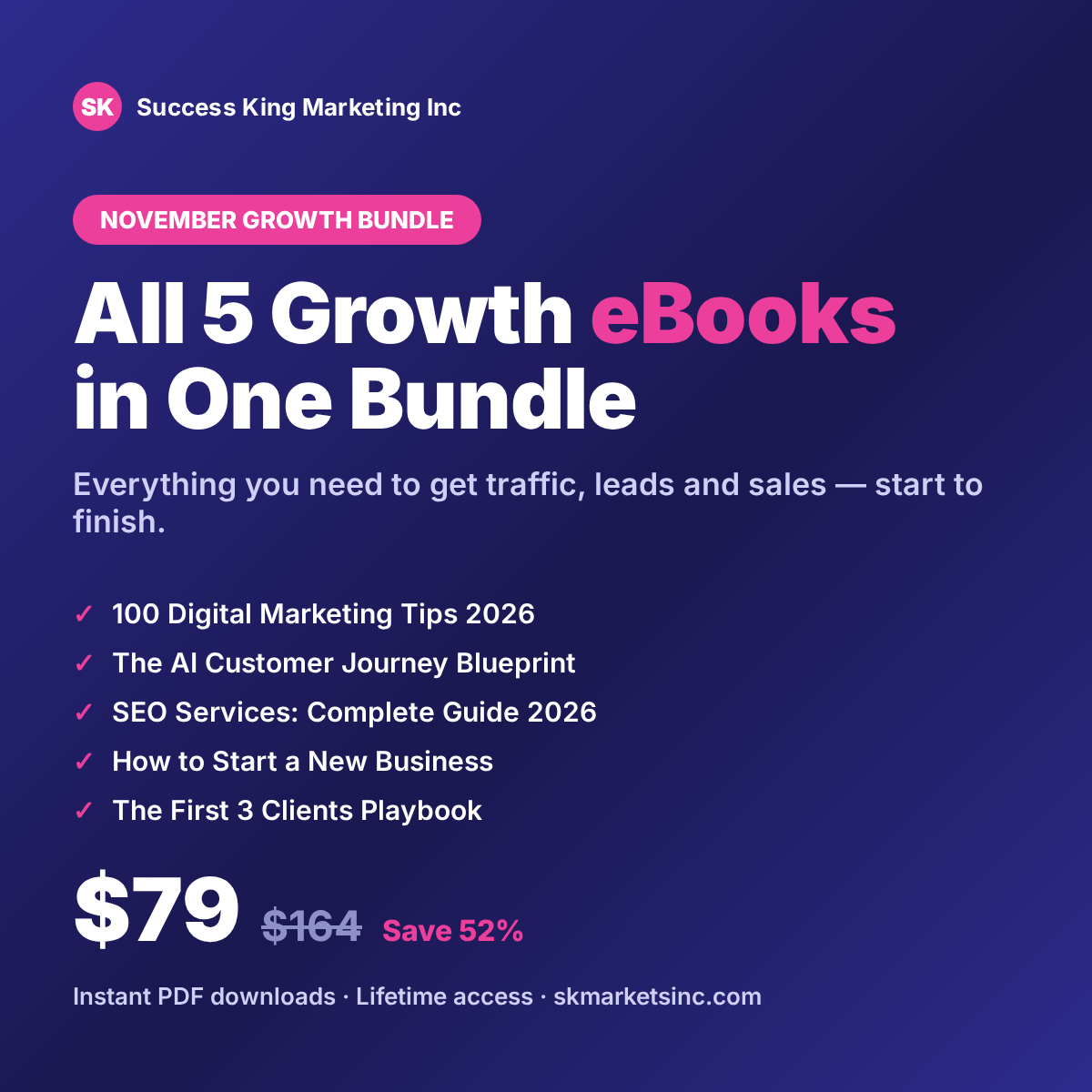
If you want a large stock of campaign ideas to feed your system, 100 Digital Marketing Tips for 2026 gives you a full year of tactics you can automate.
Choose a simple tool stack
You do not need ten expensive platforms. Most small businesses can start with four pieces: an email marketing tool with automations, a website form or chatbot for lead capture, a social media scheduler, and analytics to track results. Start small, connect your tools, and add more only when a real bottleneck appears.
Measure what matters
Check a few numbers every week: new leads, email open and click rates, conversion rate, and revenue from automated flows. If one automation is not performing, change one thing at a time, such as the subject line, the offer or the timing, and compare the results.
Your next step
AI marketing automation for small businesses is not a luxury anymore. It is how small teams compete with big brands. Map your journey, automate lead capture, launch a welcome sequence, recover lost sales and reward loyal customers. Build one piece this week and the next piece the week after.
For the complete step-by-step system, including journey maps, prompt libraries, checklists and a 90-day action plan, get The AI Customer Journey Blueprint and start automating today.